

Automating inquiries, lead capture, and follow-up across WooCommerce and CRM systems
Professional training organizations manage conferences, webinars, publications, and ongoing customer relationships across multiple systems. When website inquiries, event registrations, e-commerce platforms, and CRM systems are not well connected, staff often spend time responding to routine questions, transferring data between platforms, and manually following up with prospects.
AI agents and workflow automation can streamline this process by guiding visitors to relevant training, capturing structured inquiry information, and routing that data automatically into systems such as WooCommerce and Salesforce. Instead of managing scattered emails and manual updates, staff receive clear summaries and organized leads, allowing them to focus on higher-value work such as sales conversations, program planning, and customer relationships.
Who This Work Is For
Organizations that manage complex information and customer relationships often benefit most from workflow automation.
Typical examples include:
- Training and conference organizations
- Professional service firms
- Membership associations
- Small and mid-sized businesses managing multiple systems
- Organizations using platforms such as WordPress, WooCommerce, and CRM systems
If your team spends time moving information between systems, responding to routine inquiries, or handling repetitive administrative tasks, AI-assisted workflows can help.
Typical Automation Opportunities
AI and workflow automation can support many everyday business processes, including:
- Routing website inquiries automatically
- Guiding visitors to the right services or products
- Capturing structured lead information
- Synchronizing data between websites, e-commerce, and CRM systems
- Summarizing customer interactions for staff
- Automating follow-up communication
- Reducing repetitive administrative tasks
The goal is not to add new technology unnecessarily, but to improve the flow between systems that already exist.
How I Typically Work
Most engagements begin with a short review of existing systems and workflows to identify where automation can reduce manual steps or improve response speed.
Typical steps include:
- Workflow review – understanding how information moves between systems
- Opportunity identification – identifying processes where automation can help
- System design – designing practical automation that works with existing platforms
- Implementation – connecting systems and testing workflows
- Ongoing refinement – improving efficiency as systems evolve
The focus is on practical improvements rather than large-scale system changes.
Where This Approach Applies
Many training organizations use platforms such as WordPress, WooCommerce, and Salesforce to manage registrations and customer relationships. AI-assisted workflows can help connect these systems and reduce manual administrative work.
While this example focuses on training organizations, the same principles apply to many small and mid-sized businesses.
AI-Supported Workflow for Training Organizations
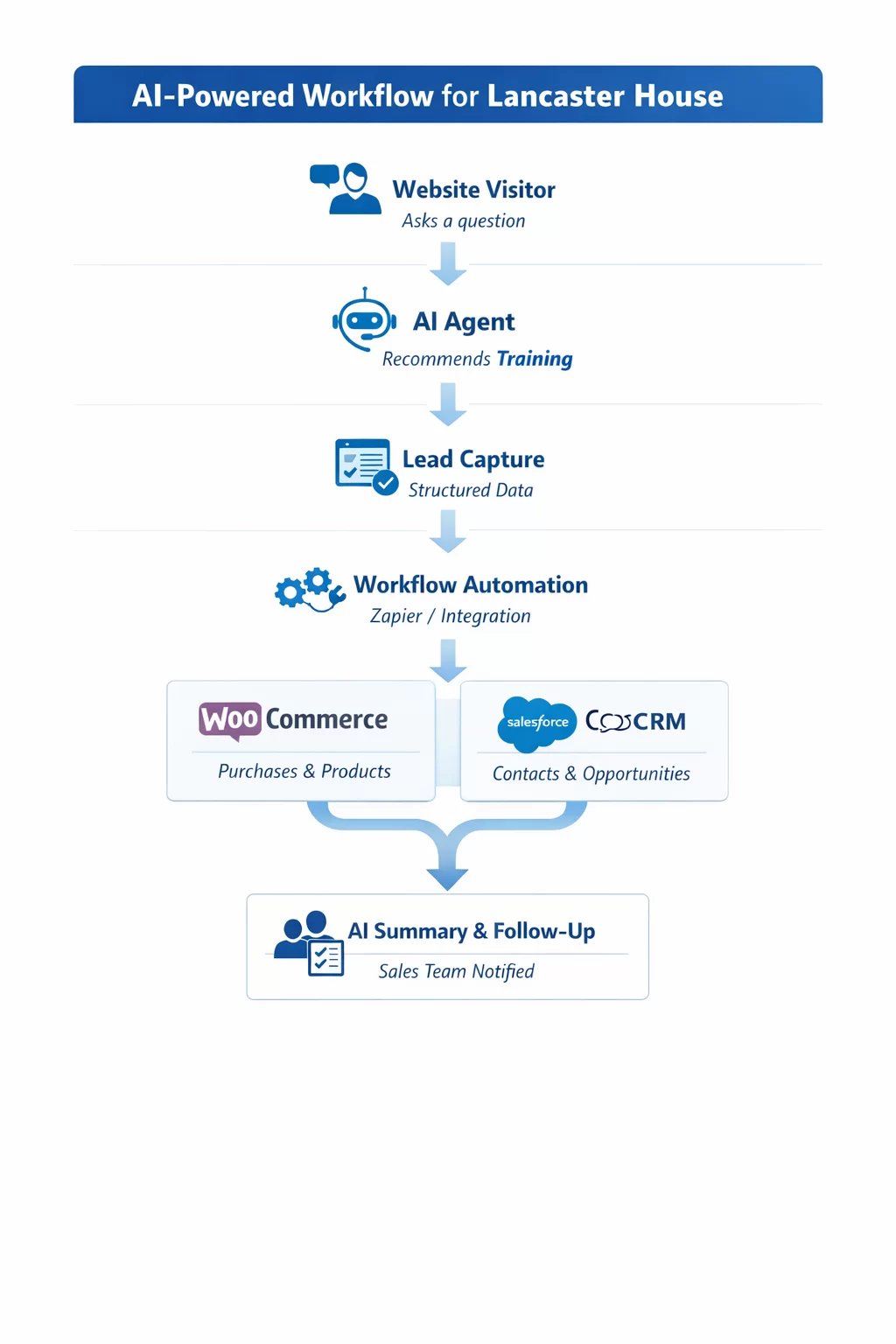
The workflow below illustrates how an AI-supported system can guide inquiries, capture leads, and synchronize information across WooCommerce and CRM platforms.
Practical AI for Small Businesses
The goal is not to add technology for its own sake, but to improve the flow between systems that already exist. The most effective approach is AI where it helps, not by default. By layering automation onto existing platforms, training organizations can reduce repetitive administrative work, improve data consistency, and respond to inquiries more quickly. The result is a smoother operational flow that supports both staff and customers while allowing the organization to focus on what it does best: delivering high-quality professional education.
If you’re considering AI assistants for small businesses and want to understand what would actually fit your operations, you can request a quote to explore options without obligation.
AI for small businesses in Toronto works best when it reduces workload and supports existing systems. Practical AI focuses on clarity, consistency, and behind-the-scenes efficiency — not hype.
Additional Insights on Practical AI



PRACTICAL AI
BUILT TO BE USED.
If you’re curious whether AI or automation would actually help your business, a short walkthrough is usually enough to know.
No pressure.
No sales pitch.
Just clear, practical guidance.